Fidget’s Sound-and-Seek
Find it. Say it. Map it.
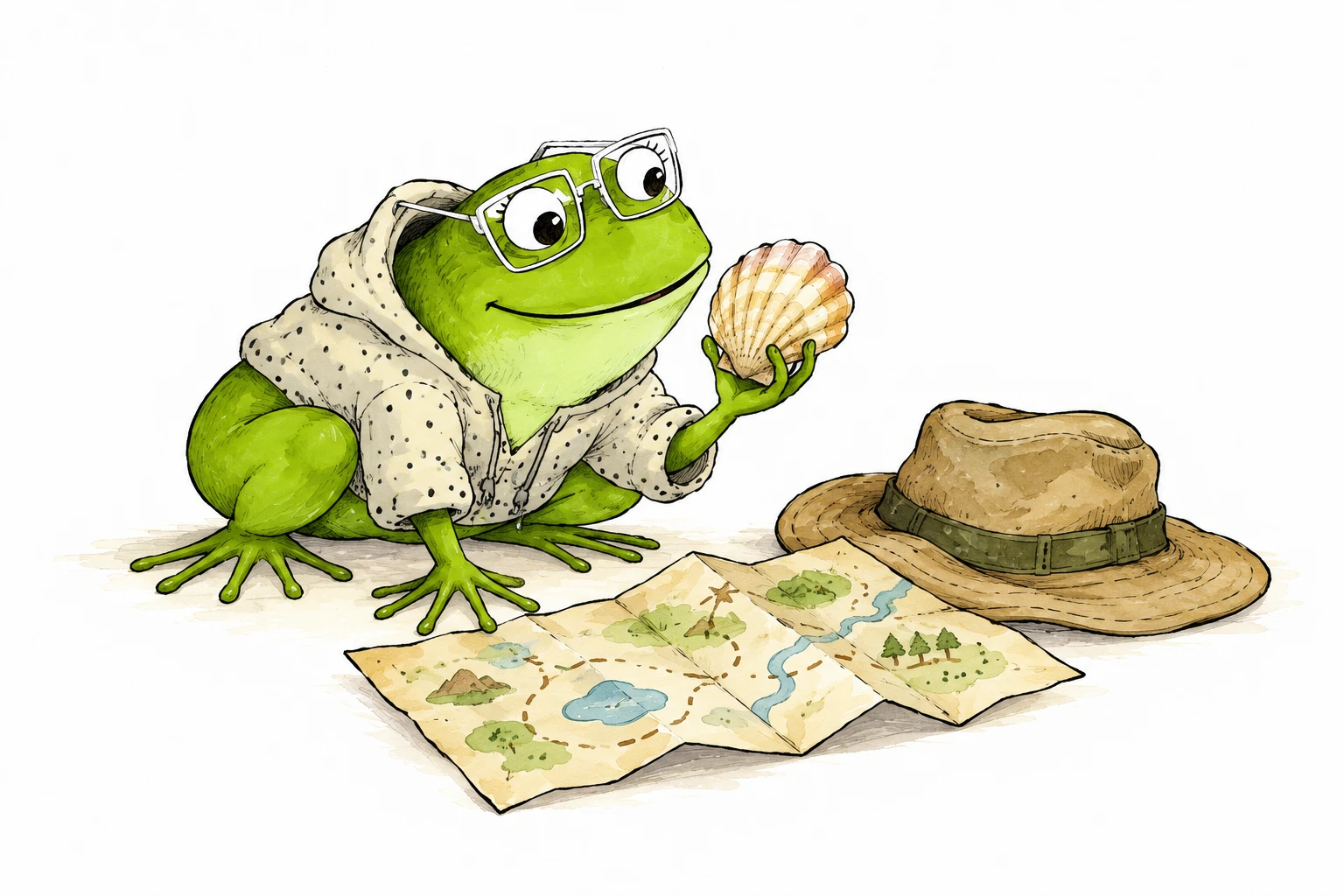
Curiosity, early sounds and positional language
Follow Fidget’s clues, discover little treasures and make a map for another explorer.
Children will practise
- Follow a short instruction using under, over, around or behind.
- Name a discovery and listen for its first sound; try oral blending where appropriate.
- Draw a simple map and explain where a treasure is hidden.
Make and keep: A treasure map and a spoken clue to share with a partner.
EYFS: Communication and Language; Literacy; Mathematics. Adapt the suggested connections to your setting.
How the session works
- 0–5 min · Meet the explorer
Read the verse on page 5 and retell the setup: Fidget is curious while Bearwolf snoozes. Invite children to act under, over, around and behind with their hands. Ask: ‘What might Fidget find?’
- 5–10 min · Listen and notice
Pull three objects from the bag and agree their names. Say each naturally, then model its initial sound. For children ready for blending, use familiar words such as /m/ /a/ /p/. Keep pronunciation aligned with the school’s phonics teaching.
- 10–20 min · Sound-and-seek
Pairs follow one spoken clue at a time: ‘Find the pen behind the box.’ One child looks while the other repeats or points to the clue. Swap roles. Ask ‘Where was it?’ Accept speech, gesture or pointing, then model the full phrase.
- 20–30 min · Make a map
Give out page 8. Children draw two familiar places and a treasure, then explain the hiding place. An adult can scribe. A map shows where things are; it need not be an accurate plan or use compass directions.
- 30–35 min · A clue for a friend
Partners use their maps to give and follow a clue. Notice whether the clue is clear enough. Model changing ‘over there’ to ‘behind the box’.
- 35–40 min · Share the discovery
Use page 9 to draw or dictate first, next and last. Invite a few volunteers to share. Finish together: ‘We looked closely. We listened carefully. We found something!’
Preparation & materials
You will need
- One pack for the teacher; pages 6–7 for treasure cards; page 8 per child or pair.
- Pencils, crayons, a bag, a chair, a box and six familiar classroom objects.
- Use hat, cup, pen, bag, sock and map first. Add other cards only when useful.
- Optional: a toy frog and a large sheet for a shared map. No screen or purchased book is needed.
Before you begin
- Choose three to six objects. Agree each name before asking about its sounds.
- Check words and sounds against the class’s phonics programme. This is extra practice, not a replacement lesson.
- Place treasures at accessible heights in one visible area. Do not hide things on climbing furniture.
- Print cards single-sided at 100% on A4. Adults cut out the cards before the session.
Support, stretch & learning checks
Support and access
- Show the object as you name it; offer two choices and time to respond.
- Model one positional word at a time before combining an action and place.
- Allow pointing, partner talk, home-language rehearsal or adult scribing.
- Offer a tabletop hunt with visible objects for children who prefer a smaller space.
Take it further
- Give a two-step instruction and ask the child to repeat it before moving.
- Invite children to give their own clue or orally blend a word containing taught sounds.
- Write a label only using the letter–sound correspondences already taught.
Listen and look for
- Can the child follow one positional clue?
- Can they name an object and notice a sound, with the agreed level of support?
- Can a partner locate a treasure from their map or spoken clue?
Bring the story to life together.
These workshops can be led by your teacher or developed into an author visit with D. C. R. James. Tell us your year groups, pupil numbers and what you would like to explore.
Session length, group sizes, accessibility requirements and the timetable are agreed with the school before booking. Optional signed-book orders can be discussed.